![Selling fire-damaged house [market_city]](https://image-cdn.carrot.com/eyJidWNrZXQiOiJwcm9kdWN0aW9uLmNhcnJvdC11cGxvYWRzLm9uY2Fycm90LmNvbSIsImtleSI6InVwbG9hZHMvc2l0ZXMvNzU3MTMvMjAyNi8wNy9TZWxsaW5nLWZpcmUtZGFtYWdlZC1ob3VzZS5qcGciLCJlZGl0cyI6eyJyZXNpemUiOnsid2lkdGgiOjExNTJ9LCJ0b0Zvcm1hdCI6IndlYnAiLCJ3ZWJwIjp7InF1YWxpdHkiOjcwfX19)

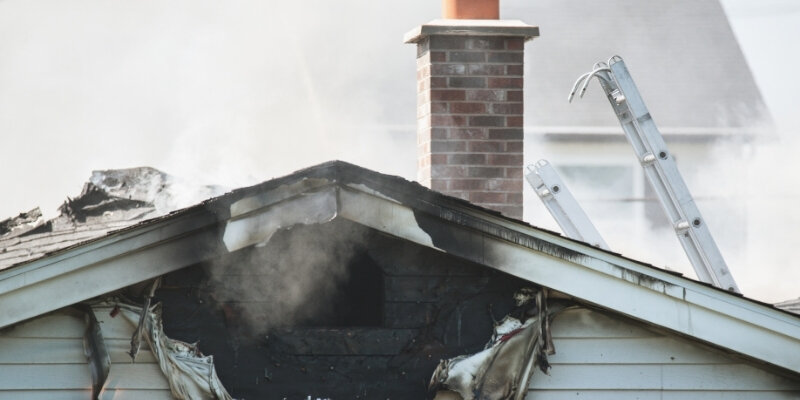
Your house caught fire. Maybe it was a kitchen flare-up that took out half the back of the home, or maybe a wiring problem in the attic turned a quiet Wednesday night into something you’ll never forget. Either way, you’re sitting with a property that’s damaged, a mortgage that keeps running, and a pile of decisions you weren’t expecting to make this year.
Selling a Fire-Damaged House in Texas: What You Need to Know

Skipping the disclosure step will end your sale fast. Trying to close on a fire-damaged property in Texas without getting your paperwork in order doesn’t just risk a lawsuit; it blows up the transaction entirely and can leave you personally liable for damages a buyer discovers after closing. Getting the disclosure right from the start is exactly why understanding the full picture early matters so much.
House fires are a routine emergency call in every part of Texas, and the financial weight of one lands on the homeowner left holding the property. That reality stops being abstract when the house is yours. And across this state, from older craftsman bungalows in Fort Worth’s Near Southside neighborhood to ranch-style homes out in Pflugerville, every one of those fire events kicks off the same sequence: emergency response, assessment, insurance calls, and then the question of what to do with the property.
What to Do First After a House Fire in Texas
Waiting on your insurance company before documenting the property yourself is a mistake you can’t walk back from. Once the adjuster’s initial estimate is in, reopening scope disputes gets harder with every passing week, and the carrier has every incentive to close the file fast.
Those first 48 hours matter more than most people realize. Before you clean anything, remove anything, or let contractors start pulling debris, photograph and video every room, every damaged surface, and every structural element you can safely access. Get those files backed up to the cloud the same day.
Call your insurance company to report the loss. Under Texas Insurance Code §542.055, most carriers must acknowledge your claim and request the documents they need within 15 days of notice, so start that clock immediately. While you’re at it, ask your insurer specifically whether your policy includes “Additional Living Expenses” coverage, which would cover temporary housing if the home is uninhabitable. Many homeowners in areas like Sugar Land and League City discover they’ve been paying for that coverage and never thought to use it.
Get the property secured. Board up windows, cover roof openings with tarps, and change the locks if the structure is still accessible. This step isn’t just about protecting what’s left; it directly affects your insurance claim, because most policies include a provision requiring the insured to prevent further loss.
How to Get a Fire Incident Report in Texas
The official fire incident report from the responding fire department documents the cause, origin, time of response, and a preliminary damage assessment. For sellers, that report does three things at once: it supports your insurance claim, satisfies Texas disclosure obligations, and provides potential buyers with an objective third-party account of what happened. Cash buyers and real estate investors in Texas routinely ask for it. If you don’t have it ready, experienced buyers will wonder what you’re hiding, even if you’re hiding nothing.
To get it, contact the fire department or the fire marshal’s office that responded to the incident. In a large city like Houston or Dallas, the process moves quickly, and most departments have online request portals. Smaller departments in areas like Boerne, Georgetown, or Uvalde may require an in-person or mail-based request. There’s typically a nominal fee. Give it two to three weeks, though you can often request a preliminary copy faster if you explain it’s needed for an active insurance claim.
How to Document Fire Damage for an Insurance Claim
According to Insurance Information Institute data, fire and lightning claims averaged $83,991 between 2018 and 2022, the most financially severe category of homeowners’ claims. At that dollar level, every document matters. Adjusters are trained to quickly identify scope and value. Your job is to make sure nothing gets missed.
Room-by-room photo and video documentation is your foundation. Don’t just photograph the obvious burn areas. Capture smoke staining on walls and ceilings throughout the home, water damage from fire suppression, HVAC vents that circulated smoke throughout unburned rooms, and personal property that was damaged or destroyed. If you opened a closet or a cabinet and saw damage, photograph it before you close it (adjusters review every frame).
Build a written inventory of damaged personal property. Serial numbers, estimated ages, original purchase prices, and any receipts or photos you have from before the fire. This takes time, but adjusters assign value based on documentation, not memory. A television you can prove you purchased 18 months ago gets a very different valuation than one you describe without evidence.
Get your own independent contractor estimate before the adjuster completes the scope. When two legitimate estimates diverge, you have room to negotiate. When you only have the carrier’s estimate, you’re accepting their math. I’ve watched sellers in neighborhoods like Oak Cliff in Dallas and Midtown Houston leave real money on the table because they assumed the adjuster’s first number was final.
How to Mitigate Fire Damage and Protect Your Insurance Claim
Most standard homeowners policies include a duty-to-mitigate provision, which means you’re obligated to take reasonable steps to prevent additional damage after a covered loss. A fire that burns through the roof doesn’t give rain permission to soak the flooring and walls for the next three weeks. If secondary water damage occurs because you didn’t cover the roof opening, the carrier may deny that portion of the claim outright (and I’ve seen it happen fast).
Mitigation for a fire-damaged home typically includes: tarping roof breaches to prevent water intrusion, boarding up broken windows and doors, removing standing water left by fire suppression, and securing the property against unauthorized entry. In Texas heat, an unsecured, damaged structure can become a mold problem within days, and remediation costs can run into the tens of thousands if left unaddressed.
How to File a Fire Damage Insurance Claim in Texas
Texas Insurance Code Chapter 542 governs the process. Carriers generally must acknowledge your claim and request all documentation they reasonably need within 15 days of notice (§542.055), then notify you in writing whether they accept or reject the claim within 15 business days after receiving everything they asked for (§542.056). If they accept, payment is due within 5 business days of that notice (§542.057). The 15-business-day decision clock starts only after the insurer confirms it has everything it needs, so submit documentation in one go rather than piece by piece.
Your claim package should include the fire incident report, your own photo and video documentation, a written inventory of lost or damaged personal property, contractor estimates for structural repair, and any receipts or proof of value for significant items. Submit it all together, then follow up in writing to confirm the carrier has received and accepted the package as complete.
Texas Fire Damage Disclosure Laws for Home Sellers
Texas uses a Seller’s Disclosure Notice form, which includes a specific question about fire damage. The seller must answer it.
The Texas Property Code requires sellers to disclose known defects that materially affect the value or desirability of the property. Fire damage clears that bar without much debate. Smoke damage, structural compromise, water damage from suppression, and any resulting mold are all disclosable conditions. Trying to characterize partial fire damage as something minor, or omitting it because the repairs were completed, is the kind of decision that leads to post-closing litigation in Texas courts.
Here’s what most articles on this topic leave out: the disclosure obligation doesn’t end when repairs are made. If you had a fire, repaired the property, and are now selling, you still must disclose that the fire occurred. Texas courts have consistently treated the history of a property as material information, not just its current condition. A buyer who discovers undisclosed prior fire damage after closing has a viable fraud and DTPA (Deceptive Trade Practices Act) claim against the seller, so a completed renovation doesn’t erase your legal exposure.
The Seller’s Disclosure Notice is a standardized form promulgated by the Texas Real Estate Commission. Sellers fill it out to the best of their knowledge and belief. “I don’t know” is a legitimate answer for conditions you genuinely weren’t aware of, but it’s not a shield for conditions you did know about and chose not to answer.
When you sell to a direct cash buyer like Company That Buys Houses, the disclosure process is much simpler. We know what we’re buying, we’ve seen fire damage before, and we’re not going to use the disclosure against you the way a retail buyer’s attorney might.
Repair or Sell As-Is: Which Is Right for Your Fire-Damaged House?

The repair path carries timeline risk, cost overrun risk, and the risk that, when the home is done, you still have to find a buyer in a market with elevated inventory. Selling as-is carries a pricing discount, but it closes that risk loop immediately.
The repair path makes sense when: your insurance proceeds cover the full scope, you have a local contractor you genuinely trust with fire restoration experience, your timeline is flexible, and you’re either planning to move back in or expect the repaired property to fetch a price well above the as-is value. In Houston’s Heights or Austin’s Travis Heights neighborhoods, a fully restored property can command prices that justify the rebuild.
The as-is sale makes sense when: the insurance proceeds don’t cover the full repair cost, the rebuild timeline is a financial burden, you’re managing the property from out of state, the property is in an estate, or you simply don’t want the project. Selling as-is isn’t giving up. It’s choosing certainty over a process that has a real chance of dragging out longer and costing more than the estimate.
How to Repair and List a Fire-Damaged House in Texas
Buyer financing complicates listing a repaired, fire-damaged home more than most sellers expect. It’s not enough to get the repairs done; those repairs have to pass a lender’s appraiser and, in many cases, satisfy the FHA or VA guidelines that govern the loan the buyer is using.
If you’re going to repair and list, hire a fire restoration contractor, not a general contractor. The distinction matters. Fire restoration specialists understand smoke penetration into structural cavities, code compliance for fire-affected structural elements, and the documentation process that lenders and appraisers need to verify the work was done correctly. A general contractor who dabbles in fire repairs can leave hidden smoke odor, improper framing repairs, and documentation gaps that kill transactions at the appraisal stage.
Price reductions are common across the Texas market right now, reflecting the pricing pressure sellers are facing. A fire-damaged home that has been repaired needs to be priced precisely. Overpricing it even modestly in this market results in extended days on market, which signals to buyers that something is wrong.
Budget for your agent’s commission, closing costs, and likely buyer concessions. Between commissions, title costs, and any negotiated repairs, expect to net somewhere between six and ten percent less than your final sale price. On a $300,000 sale, that’s $18,000 to $30,000 going to transaction costs before you see a dollar.
How to Sell a Fire-Damaged House As-Is in Texas
Selling as-is to a cash buyer means the property transfers in its current condition: no repairs, no staging, no waiting for a contractor to finish before you can list. The buyer takes on the repair risk, which is why you’ll receive less than the post-repair market value. That tradeoff is straightforward, and in many situations the math works out better than sellers assume when they factor in repair costs, holding costs, and the commission structure of a traditional sale.
Cash buyers who purchase fire-damaged homes fall into two broad categories: real estate investors who rehab and resell, and investors or developers who acquire at land value or demolish the structure. The type of buyer you’re dealing with affects the offer you receive. A buyer who sees rehab value will pay more than one who sees only the lot.
As a company that buys houses in Texas, we buy fire damaged properties exactly this way: as-is, with no repairs requested and no realtor commissions taken off the top. For homeowners who need speed and certainty more than squeezing every dollar out of a long process, that path is worth a real conversation.
Who Buys Fire-Damaged Houses in Texas?
Texas has a deep pool of real estate investors, from individual house flippers working in North Dallas neighborhoods to larger acquisition groups operating across Houston, Austin, and San Antonio. Fire-damaged properties are a known niche with a consistent buyer base, because the underlying land and structure still have value even when the surface level has been destroyed.
Retail buyers using conventional mortgages are largely not in that pool. Lenders won’t finance a fire-damaged home that hasn’t been remediated and repaired. FHA and VA loans specifically require properties to meet minimum property standards that a fire-damaged home generally can’t meet without extensive rehabilitation. So the realistic buyer universe for an unremediated fire-damaged property in Texas is cash buyers and investors.
The other category is land buyers. In high-growth areas like The Woodlands, Round Rock, Leander, and parts of North Austin, the land itself can carry value that makes a total-loss structure almost irrelevant. A buyer who is paying for the lot isn’t discounting heavily for the damage; the damage might even simplify their demolition calculation.
How a Cash Sale Works for a Fire-Damaged House in Texas
No lender. No appraisal contingency. No inspection period that turns up problems and forces a renegotiation. The offer reflects the property’s condition from the start, and the buyer has already priced in what they’re taking on.
A typical cash sale for a fire-damaged Texas property moves in a fairly predictable sequence. The seller contacts a buyer or buyer’s service, provides basic property information and describes the damage, and receives a preliminary offer range within 24 to 48 hours. The buyer then either does a walkthrough or reviews submitted photos to confirm the scope and issues a formal written offer. If the seller accepts, a TREC-approved purchase contract gets executed, and the title company opens escrow. Close can happen in as few as 7 to 10 days, though 2 to 3 weeks is more typical (fire damage rarely makes it faster).
Buyers base their offer on a fire-damaged property on the post-repair value of the home, minus the estimated cost of repairs and the buyer’s margin. That math is fairly transparent once you understand it. You’re not getting full market value; what you’re getting is market value minus the work you’re handing off. For many sellers, especially those with carrying costs, outstanding mortgage balances, or emotional exhaustion from dealing with the aftermath of a fire, that trade is worth it.
How to Request a Cash Offer on a Fire-Damaged House in Texas
Start with a clear summary of the property. The address, the approximate square footage, the year built, and a plain-language description of the fire damage. Where it started, which rooms or areas were affected, whether there is a structural compromise, and the current status of your insurance claim, a cash buyer needs those facts to give you a real number, not a range designed to get you on the phone.
Get your documentation package before you start making calls. This means the fire incident report, your insurance company’s initial scope and estimate (if available), any contractor estimates you’ve received, and basic title information. Having these ready allows a buyer to move faster and signals that you’re serious about a real transaction.
Ask every buyer you speak with for proof of funds. A legitimate cash buyer should have no problem providing a bank statement or a letter from their funding source confirming they can close at the offer price. If a buyer delays or hedges on proof of funds, walk away.
Read the purchase contract carefully. Pay attention to the closing timeline, any contingencies, the earnest money amount, and who pays closing costs. In Texas, closing costs for a cash transaction are lower than for a financed sale, but they still apply. A reputable buyer will be clear about who is paying what.
Whether you’re looking for cash house buyers in Arlington, TX, cash home buyers in Dallas, TX, or a buyer anywhere else in the state, we handle fire-damaged properties throughout Texas. We can walk you through a no-obligation offer process without pressure.
How to Get the Most Money From Your Fire-Damaged Property in Texas

Your leverage in a cash sale comes from the information you have. A buyer pricing your property without comparable data can anchor their offer low, leaving you with no basis to push back. Get at least one independent contractor estimate for the full repair scope before you talk to buyers. That estimate sets a floor for the negotiation. If a buyer is quoting you a repair cost that is 40% higher than the independent estimate, they are either padding their risk margin or they have a point about hidden damage (something I’ve seen go both ways on fire jobs). You want to know which.
Understand your neighborhood’s post-repair comparable sales. In markets like Friendswood, Pflugerville, or Coppell, where renovated homes sell at consistent price points, the post-repair value is relatively predictable. A buyer who offers dramatically below what a renovated comparable would bring in that area is leaving room on the table. You don’t have to accept it.
Elena Caldwell reached out to me about her mother’s home in Bastrop, a three-bedroom on a corner lot with a detached garage still full of her mother’s belongings and a workshop full of tools she’d planned to sort through that weekend. The house had caught fire two weeks after her mother moved into an assisted living facility, and Elena was managing everything from two hours away. She hadn’t cleared the garage or the workshop, and she didn’t want to. We bought the property as-is, belongings and all, and she closed at the end of that month. She told me later that the biggest relief wasn’t the money. It was not having to make any more decisions about that garage.
Frequently Asked Questions
How Do You Price a Fire-Damaged House?
Pricing a fire-damaged property starts with the post-repair value of the home, which you estimate using comparable recent sales in the same neighborhood. From that number, subtract the realistic cost of full repairs based on a licensed contractor’s estimate, then subtract the buyer’s margin for taking on the risk and managing the project. What remains is the fair market range for the property as-is. Sellers who have an independent repair estimate before entering negotiations are in a much stronger position than those who don’t.
How Do You Avoid Capital Gains Tax When Selling a House in Texas?
Texas doesn’t levy a state capital gains tax, so your exposure is limited to the federal level. The federal exclusion allows single filers to exclude up to $250,000 in capital gains on a primary residence, and married couples can exclude up to $500,000, provided they’ve owned and lived in the home for at least two of the previous five years. If the property is an investment or rental, a 1031 exchange allows you to defer federal gains by rolling proceeds into a like-kind property. An accountant who handles Texas real estate transactions can confirm which strategy fits your situation.
What Should You Not Fix Before Selling a Fire-Damaged House?
Cosmetic improvements that won’t move the needle on the offer price, such as landscaping, interior paint in undamaged rooms, or minor fixture updates, are generally not worth doing before an as-is cash sale. Buyers pricing fire-damaged properties are focused on the structural and systems scope, not curb appeal. Spending money on cosmetics when the real issues are structural just reduces your net without changing the buyer’s calculation. The exception is targeted work that addresses safety or open-permit issues, which can otherwise complicate or delay closing regardless of who the buyer is.
If you’re carrying fire-damaged property in Texas and aren’t sure which direction makes the most sense for your situation, you’re welcome to contact us. No obligation, no pressure. We’re just happy to talk through what you’re dealing with and give you an honest read on your options.
Helpful Texas Blog Articles
- Seller Didn’t Disclose Termite Damage in Texas
- What Can I Write Off When I Sell My House in Texas?
- Selling an Inherited House in Texas
- Avoid Closing Costs When Selling Your House in Texas
- Selling Your House Without A Realtor In Texas
- How to Sell a House During a Divorce in Texas
- Sell Your Home Below Market Value in Texas
- Documents Required for Selling Inherited Property in Texas
- Selling a House With Water in the Crawl Space in Texas
- How To Sell A Fire-Damaged House In Texas
- Selling A House With A Lien In Texas
- How Long to Live in a House Before Selling
- How To Sell Rental Property Without Paying Taxes